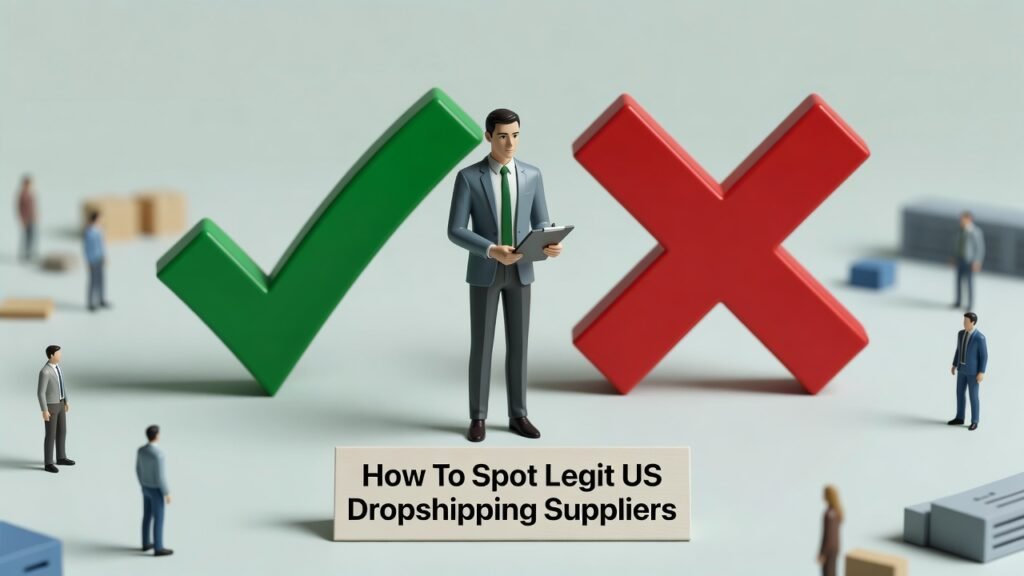
Verdict: The majority of sellers claiming to be US dropshipping suppliers are either resellers holding thin domestic stock or overseas operations renting US storage space as a stopgap. Buyers who skip the vetting process end up with unpredictable shipping times, retail-branded boxes, and refund queues. Use the 24-hour tracking test and a physical test order before committing to any program.
What Separates a Real Supplier From a Reseller
A genuine US dropship supplier is a manufacturer, brand, or authorized wholesaler that holds physical inventory inside US warehouses and ships directly to end customers under a formal dropship agreement. The merchant never pre-purchases stock. The supplier picks, packs, and ships one unit at a time using blind packaging, meaning no supplier invoice or marketplace branding reaches the customer. That arrangement is structurally different from working with a reseller, who may own inventory but operates as an intermediary rather than as a fulfillment partner with dedicated dropship infrastructure.
A reseller or overseas warehouser often lists products as “Ships from USA” while fulfilling from China once local stock runs low. This creates a split experience where the first few orders arrive in three days and subsequent ones take three weeks. The physical point of origin on the tracking number tells the real story. Authentic US dropshipping suppliers generate USPS, UPS, or FedEx tracking numbers from domestic origins, and they can do so within 24 hours of a confirmed order for any in-stock item.
Retail arbitrage sits in a third, problematic category. Buying from Amazon, Walmart, or AliExpress and reshipping to customers is not dropshipping with a supplier at all. It is retail arbitrage, and Amazon’s dropshipping policy prohibits fulfilling orders from another retailer; other selling platforms take the same position in their seller terms. The presence of a retail invoice or a marketplace box inside a customer’s package is the clearest sign that a merchant has confused a retailer with a wholesale fulfillment partner.
The Fastest Vetting Method: The 24-Hour Tracking Test
Before signing a supplier agreement or connecting a data feed, contact the supplier directly and ask one question: can they provide a USPS, UPS, or FedEx tracking number within 24 hours of an order being placed for an in-stock item? A legitimate domestic supplier will say yes without hesitation, because their warehouse management system generates a label immediately on order confirmation. Any answer involving multi-day “processing windows” or vague language about fulfillment timelines is a strong indicator that stock is actually sitting overseas or that the supplier is routing through a third-party Chinese fulfillment center.
The 24-hour tracking test filters out the majority of problem suppliers quickly and at no cost. Follow it with a physical test order placed to a personal address. When the package arrives, check the shipping origin on the label, verify transit time against what was promised, inspect the packaging for any retail branding, and confirm there is no retail receipt or third-party invoice inside. Real US dropshipping suppliers send packages in plain or branded merchant packaging with no reference to their own company or any consumer marketplace.
Real vs. Reseller: A Side-by-Side Comparison
The table below cuts through the marketing language. Most resellers and overseas warehousers use the same vocabulary as real domestic suppliers. The differences show up in operations, not in sales copy.
| Criteria | Real US Dropship Supplier | Reseller or Overseas Warehouser |
|---|---|---|
| Tracking number speed | Within 24 hours, US origin scan | 1-5 days, often China or no origin data |
| Shipping carrier | USPS, UPS, FedEx from US facility | ePacket, Yanwen, or forwarded via US hub |
| Delivery window | 3-5 business days, consistent | Inconsistent; 3 days or 3 weeks depending on local stock |
| Packaging | Blind ship, no supplier branding or invoice | May include retail invoices or marketplace boxes |
| Program structure | Formal agreement, data feed, order API | Ad-hoc orders through public marketplace listings |
| Inventory sync | Live feed prevents overselling | Manual or no sync; frequent stockouts |
| Returns | Clear domestic return policy and SLA | Complicated, slow, or no returns accepted |
| Business address | Verifiable US address, multiple warehouse locations | Virtual office or untraceable address |
Where to Actually Find Vetted US Suppliers
Sourcing legitimate US dropshipping suppliers from a cold Google search is inefficient and high-risk because anyone can claim to be a domestic supplier. Pre-vetted directories and supplier networks do the initial screening work and allow filtering by country of origin and fulfillment type. SaleHoo is a research directory rather than a store app: it verifies suppliers and bundles a market research tool for evaluating demand before committing to a category, but merchants contact each supplier directly and orders never route through SaleHoo itself. Spocket is the opposite model, an integration-first platform focused on US and EU suppliers: products import and orders route inside its Shopify and WooCommerce apps, it supports branded invoicing so packages carry the store’s name, and access is sold through tiered monthly plans.
TopDawg connects merchants with US-based dropship suppliers across categories including home goods, outdoor gear, and pet products, with automated order syncing and live inventory feeds. Its emphasis on stock already sitting in US warehouses keeps delivery inside the domestic three-to-five-day window the vetting test checks for. Wholesale2B is the aggregator of the group, bundling supplier access with integrations for Amazon, eBay, Shopify, and BigCommerce; its plans are structured per sales channel, and it can handle order placement with the supplier on the merchant’s behalf rather than just exporting a product feed. These platforms vary in fee structure, so merchants should review setup costs, monthly fees, and per-order charges in full before selecting one. Transparency about fees is itself a quality signal: legitimate US dropshipping suppliers and the directories that list them publish their pricing clearly.
What does the buyer these directories serve actually look like? A typical case makes the fit concrete.
Buyer Persona: Sarah, a Shopify store owner selling home decor who has had two supplier relationships collapse after customers complained about 15-day delivery times. She needs a verified US supplier with live inventory sync and blind shipping so she can list on Amazon without risking policy violations. A platform like Spocket or TopDawg fits her situation because both provide domestic supplier networks with direct platform integrations, eliminating the manual order routing that created problems with her previous sources.
What Legitimate Dropship Programs Actually Include
The operational structure of a real dropship program is not optional. US dropshipping suppliers that run genuine B2B fulfillment networks provide a formal agreement with clearly defined service level commitments, a product data feed with images and descriptions, automated order routing via API or EDI, blind shipping support, and real-time inventory sync that prevents a merchant from selling a unit that is no longer in stock. These are standard features, not premium add-ons. A supplier that handles orders through a shared Google Sheet or through a public Etsy store is not running a dropship program.
Category and Strategy Considerations
Not every product category has the same depth of US domestic supplier coverage. Branded fashion, licensed goods, and some electronics categories have strong authorized wholesaler networks that explicitly support dropshipping. General merchandise and commodity goods have more mixed supply chains where domestic and overseas sources compete, making vetting more important. Print-on-demand is a separate category with its own fulfillment providers, and the US-based options there are structurally different from traditional wholesale dropshipping relationships.
Category choice also affects how aggressively a merchant needs to compete on price. Buying through a pre-vetted directory typically adds a layer of cost compared to sourcing directly from a manufacturer’s dropship program. For merchants building a branded store in a single niche, reaching out directly to manufacturers and requesting a wholesale or authorized reseller agreement can yield better margins and greater control. For merchants running a broader catalog across multiple categories, a supplier network or directory is usually more practical than managing individual supplier relationships at scale.
Quick Takeaways
- Real US dropshipping suppliers hold domestic inventory, ship via USPS or UPS from US facilities, and can provide tracking within 24 hours of an order.
- The 24-hour tracking test and a physical test order are the two most reliable vetting methods before committing to any supplier relationship.
- Retail arbitrage through Amazon or Walmart is not dropshipping and violates the terms of most selling platforms.
- Pre-vetted directories including SaleHoo, Spocket, TopDawg, and Wholesale2B filter for genuine domestic suppliers and reduce sourcing risk significantly.
Frequently Asked Questions
- How can a buyer tell if a supplier actually ships from the US?
- Ask the supplier to confirm they can provide a USPS, UPS, or FedEx tracking number with a US origin scan within 24 hours of an order. Then place a test order to a personal address, verify the carrier scan location, and check that the package arrives within three to five business days without any overseas postage markings or retail branding on the box.
- What is the difference between a dropship supplier and a reseller?
- A dropship supplier stores inventory and ships individual orders directly to end customers on behalf of a merchant, without requiring the merchant to pre-purchase stock. A reseller buys inventory and resells it in bulk or to consumers directly. Resellers are not set up for one-at-a-time blind fulfillment and generally lack the data feeds, order APIs, and SLAs that define a proper dropship program.
- What fees should a merchant expect from US dropshipping suppliers?
- Legitimate domestic suppliers and dropship directories typically charge some combination of a one-time setup fee, a monthly access or membership fee, and a per-order handling fee. Transparent suppliers publish these fees clearly before onboarding. Vague or shifting fee answers are a red flag, as is any supplier that asks for payment without providing a formal agreement and clear terms.
- Do US dropshipping suppliers support Shopify and other platforms?
- Most established US dropshipping suppliers or the directories that connect merchants to them offer integrations with Shopify, WooCommerce, Amazon, eBay, and BigCommerce. These integrations handle product imports, live inventory syncing, and automated order routing. Merchants should confirm that the integration is two-way, meaning inventory updates push to the store automatically, to avoid overselling out-of-stock products.
- Why does using a domestic supplier matter for US customers?
- US dropshipping suppliers eliminate customs delays, import duties, and the unpredictable transit times associated with overseas fulfillment. Customers receive packages in three to five business days through familiar domestic carriers, and returns go to a US address rather than through an international process. Consistent delivery performance reduces refund requests, negative reviews, and the chargeback risk that overseas fulfillment often creates.